

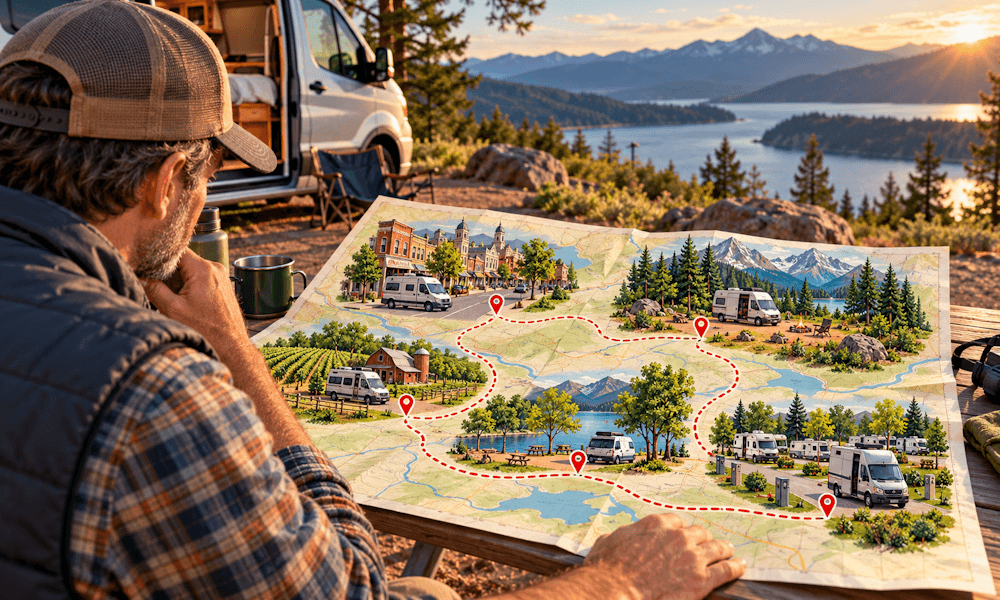
Finding a place to sleep is an essential component of Van Life. Some nights you may only need a parking space to rest before moving on. Other times, you might want a campsite with a shower, electricity, and room to sit outside.
Below is a quick breakdown of the options, moving roughly from free and basic to more expensive and developed. Prices and amenities overlap, so a paid site won’t always offer more than a free one.
Getting an idea of the places you are comfortable staying will likely have a huge impact on the vehicle you end up choosing for your Van Life.
Most Common Places to Park Overnight in Van Life
Free Parking
These first few options are generally free, but may have exceptions and plenty of legality issues to contend with.
1. City Streets and Stealth Camping
Stealth camping means sleeping in your vehicle while keeping a low profile, usually without putting anything outside. Many people find parking on city streets, and some park in industrial parks, hotels, churches, and even hospitals. It can be convenient when visiting a city, but being discreet does not make an otherwise prohibited stay acceptable. Check local parking and vehicle-sleeping rules. You might not get a ticket, but even the dreaded knock can be a disconcerting experience.
- Pros: Can be free; close to restaurants, attractions, and other services.
- Cons: Traffic, noise, limited privacy, and uncertainty about where overnight stays are permitted.
2. Friends’ and Family Members’ Driveways
With permission, a driveway can provide a simple overnight stop and a chance to visit people along your route. Best of all, you still have your own stuff with you, and you won’t have that awkward moment in the middle of the night when you see your aunt in her nightgown when you try to sneak into the bathroom. Of course, you should probably check local restrictions before settling in. Gladys Kravitz next door will be quick to turn you in.
- Pros: Often free; familiar surroundings; possibly access to a bathroom, laundry, power, and water.
- Cons: Limited to places where you know someone; space and neighborhood rules may be an issue.
3. Business Parking Lots
Some retailers, restaurants, casinos, and travel centers allow overnight vehicle stays. Cracker Barrel often allows overnight parking. Some Walmarts still allow it, and many casinos don’t seem to have a problem. Some people have also had success with 24-hour gyms like Planet Fitness.
Permission varies by location, so ask the business before staying. Treat these as places to park and rest rather than spaces to spread out a campsite.
- Pros: Often free or inexpensive; convenient stops near major roads and services.
- Cons: Bright lights, traffic, and noise; permission is never something to assume.
4. Rest Areas and Travel Stops
Rest areas can provide a place to take a break during a long drive, but they are not always an option for a full night’s sleep. Rules and time limits vary. Florida rest areas, for example, generally limit the public to three hours and prohibit overnight camping. You can probably get away with at least a few hours of sleep at any rest area as long as you don’t put out the grill or set up your canopy.
- Pros: Convenient highway access; restrooms are often available.
- Cons: Truck noise and busy parking areas; time limits may prevent an overnight stay.
5. Dispersed Camping on Public Land
Dispersed camping means camping outside a developed campground. In permitted areas of national forests and Bureau of Land Management land, it can offer a free or inexpensive place to stay without hookups or facilities. Access, closures, permits, and stay limits vary by location. Many state parks have areas for dispersed camping, and out west, the Bureau of Land Management (BLM) offers thousands of acres where you can stay up to 14 days at a time. The accessibility of these lands may not suit your vehicle, but free is awfully nice.
- Pros: Low cost; space, scenery, and opportunities for solitude.
- Cons: Usually no bathrooms, water, or trash service; rough roads and limited cell service can complicate a stay.
Paid Options
6. Membership Stays: Harvest Hosts and Boondockers Welcome
Membership programs connect travelers with participating businesses or private property owners. Harvest Hosts includes locations such as farms, wineries, and breweries, while Boondockers Welcome focuses on stays with private hosts. Both have affordable yearly memberships that provide access to “free camping.” The quotation marks are there because the expectation is still that you will spend money at the business or make a donation to the host. These can still be a great way to get an affordable place to stay with the potential for great scenery.
- Pros: Interesting places to stay; opportunities to meet hosts; useful alternatives to traditional campgrounds.
- Cons: Membership costs, advance arrangements, and vehicle requirements; amenities vary.
Harvest Hosts requires a qualifying self-contained vehicle and encourages purchases from the businesses hosting you, so include that spending in your overnight budget.
7. Small Public Campgrounds
City and county parks, fairgrounds, and other locally managed properties sometimes offer campsites. These can be useful alternatives to larger parks, with facilities ranging from basic parking spaces to sites with hookups.
- Pros: Can offer good value; sometimes conveniently located near towns.
- Cons: Availability and facilities vary; events or seasonal closures may limit access.
8. State and Federal Campgrounds
State parks, national parks, national forests, and other public recreation areas offer developed campgrounds. Some are primitive, while others provide drinking water, showers, electricity, or dump stations.
- Pros: Access to trails, lakes, and other outdoor attractions; designated places to settle in.
- Cons: Popular campgrounds may require reservations well ahead of time; fees, hookups, and facilities vary.
9. Private Land and Small Hosted Campsites
Property owners may rent camping spaces through services such as Hipcamp or through direct bookings. Options range from a simple spot in a field to a developed site with utilities.
- Pros: Variety; potentially more privacy; opportunities to stay away from busy campgrounds.
- Cons: Access, amenities, and prices can differ considerably; read the listing carefully.
10. Private Campgrounds and RV Resorts
Private campgrounds range from simple overnight stops to luxurious resorts with full hookups, laundry, pools, and organized activities. They can be especially useful when you want to recharge your batteries, refill water, or take care of chores.
- Pros: More services and conveniences; a practical option for longer stays.
- Cons: Often more expensive; sites may be close together, and some properties have vehicle restrictions.
Choosing a Place for the Night
You don’t have to use the same type of overnight stop throughout a trip. Free parking may work on a travel day, dispersed camping may suit a few quiet nights, and a developed campground may be welcome when you need facilities.
The best choice depends on your budget, your van’s setup, and what you need that night.